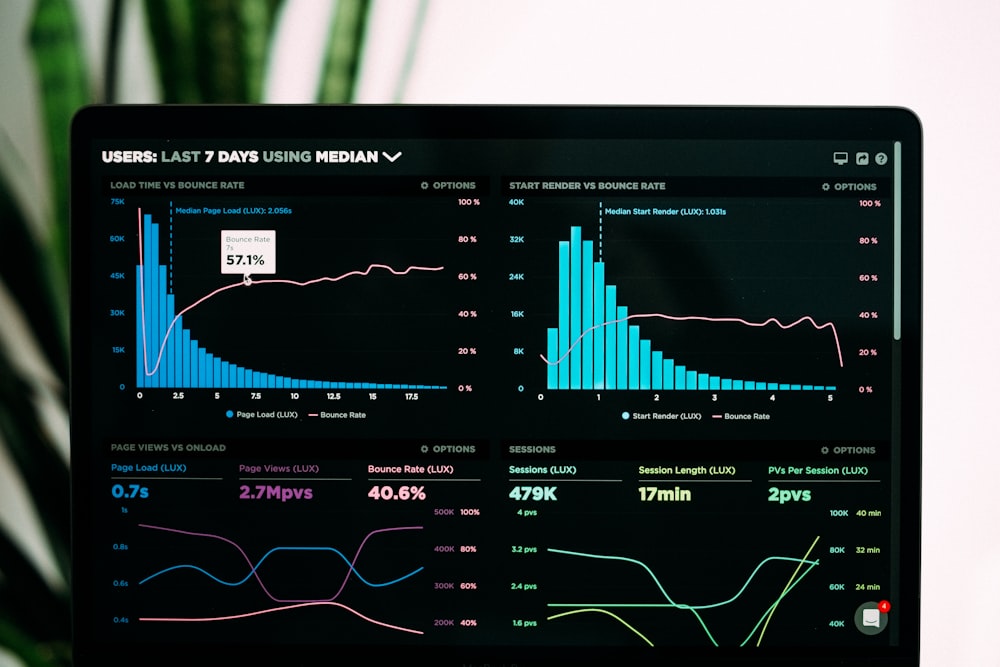
Tired of staring at 14 open tabs and red numbers you can't explain? RunnerAI translates your messy store data into plain-English instructions. No spreadsheets, no "Math Fatigue"—just real-time answers on exactly how to grow your sales.
Stop jumping between Shopify, Meta, and GA4. See your entire business health in one unified, intelligent dashboard.
No more cryptic graphs. Get plain-language explanations for why sales dropped—and exactly how to fix them.
Our AI detects anomalies (like broken checkout buttons or high refund rates) before they cost you thousands.
Turn hours of manual spreadsheet grinding into seconds of strategic decision-making.
Trusted by Founders Who Refuse to Settle for "The Grind."
“I used to spend my Sunday nights fighting with Excel formulas just to see if I made a profit. With RunnerAI, I got my first "plain English" insight in five minutes—it found a conversion error on my landing page that had cost me $2,000. I finally feel like I'm running my business instead of it running me.”
Join 500+ merchants who have automated their store analytics.
We are looking for 50 ambitious founders to help shape the future of autonomous e-commerce. The Deal: 90 days of FREE access to all premium features. The Perks: 1-on-1 support from our founding team and “VIP” community status. The Catch: You provide us with honest feedback. Don’t miss out on the new e-commerce paradigm.
Your store is trying to tell you how to grow. Are you ready to listen? Start your journey toward a self-driving business today.
“The "Mental Margin" is real. I actually took a weekend off without checking my dashboard every twenty minutes. I knew the AI was watching the store for me.”
Trusted by Founders Who Refuse to Settle for "The Grind."
We are looking for 50 ambitious founders to help shape the future of autonomous e-commerce.
Your store is trying to tell you how to grow. Are you ready to listen? Start your journey toward a self-driving business today.
Picture yourself drowning in spreadsheets at midnight, trying to understand why last month's sales dropped. You're not alone. Thousands of online store owners face this exact frustration every single day, overwhelmed by data that should guide them but instead confuses them.
The digital commerce landscape has transformed dramatically. Traditional methods can't keep pace with the volume of customer interactions happening across multiple channels. What worked five years ago simply doesn't cut it anymore.
This is where intelligent technology changes everything. An intelligence platform powered by machine learning transforms raw numbers into clear, actionable insights. Trustworthy AI solutions help ecommerce brands finally understand their customers' true behavior patterns.
Modern ai-powered systems serve as your dedicated business intelligence team, working around the clock. These sophisticated ai solutions provide an analytics platform that helps unify scattered information streams. Whether you're running a small shop or managing enterprise-level operations, e-commerce growth now depends on embracing these transformative tools.
The competitive advantage isn't just nice to have anymore—it's essential for survival in today's data-driven marketplace.
Every ecommerce business collects data, but AI-powered analytics changes what you can do with that information. Traditional analytics platforms show you what happened last week or last month. AI-driven systems reveal what's happening right now and what's likely to happen next.
This transformation goes beyond faster reports. Using AI fundamentally reshapes how your business understands customers, manages inventory, and responds to market changes. The difference between conventional analytics and AI-powered solutions lies in speed, depth, and actionability.
Modern e-commerce analytics platforms process millions of data points simultaneously. They identify patterns humans would miss and deliver insights you can act on immediately. This capability represents a competitive advantage that grows stronger as your business scales.
Raw data exists in its most basic, unprocessed form across your business systems. Purchase transactions, website clicks, abandoned carts, and customer service interactions all generate information continuously. Without proper analysis, this data remains dormant and unhelpful.
AI transforms this raw data into real-time insights through a sophisticated processing pipeline. The system collects information from multiple touchpoints, cleanses inconsistencies, and applies advanced algorithms to identify meaningful patterns. This journey from collection to insight happens in seconds rather than hours.
Real-time data across your ecommerce operations enables immediate response capabilities. When a customer abandons their cart, AI systems can trigger personalized recovery campaigns instantly. If inventory levels drop unexpectedly, automated alerts notify your team before stockouts occur.
The speed advantage changes business operations fundamentally. Traditional data analysis required waiting for batch processing cycles to complete. Teams made decisions based on yesterday's information, often missing time-sensitive opportunities. Real time intelligence eliminates this lag, empowering teams to respond while opportunities still exist.
Consider how product analytics benefits from immediate processing. AI systems monitor which items customers view together, how long they spend on product pages, and which features drive purchase decisions. These real-time insights inform dynamic pricing strategies, personalized recommendations, and inventory allocation decisions instantly.
Most ecommerce businesses operate with fragmented data ecosystems. Your Shopify store tracks transactions and customer orders. Your CRM platform maintains contact information and communication history. Marketing platforms like Facebook Ads and Google Analytics measure campaign performance separately.
This fragmentation creates significant challenges. Teams waste time manually combining reports from different systems. Data inconsistencies lead to conflicting interpretations. Strategic decisions suffer when no one sees the complete picture.
AI-powered platforms unify data from various sources like these disparate systems into cohesive intelligence layers. The technology connects directly to your existing tools through APIs and native integrations. Information flows automatically from Shopify, CRM systems, email marketing platforms, and advertising accounts into a centralized analytics environment.
This unified approach delivers several critical advantages:
Marketing data combined with transaction records reveals which campaigns drive the most valuable customers. CRM information merged with ecommerce data shows how customer service interactions affect repeat purchase rates. This connected view transforms isolated data sources into robust data foundations for strategic decision-making.
The integration extends beyond simple data consolidation. AI systems reconcile customer identities across platforms, matching anonymous website visitors to known contacts in your CRM. They standardize different naming conventions and measurement units. This intelligent unification creates accuracy that manual processes cannot achieve.
Businesses using unified analytics platforms report faster decision-making and improved team alignment. When everyone works from the same data sources, debates about "whose numbers are correct" disappear. Teams focus on strategy rather than reconciliation.
Machine learning represents the engine that powers advanced e-commerce analytics capabilities. These algorithms continuously analyze e-commerce metrics to identify patterns, detect anomalies, and predict future outcomes. Unlike static reporting rules, machine learning systems improve their accuracy as they process more information.
The technology examines historical ecommerce data to understand what "normal" looks like for your business. It learns seasonal patterns, customer lifecycle stages, and the typical relationships between different metrics. This knowledge base grows more sophisticated over time, adapting to your business's unique characteristics.
Pattern recognition capabilities exceed human analytical capacity. Machine learning algorithms process thousands of metric combinations simultaneously, identifying which factors most reliably predict business outcomes. They discover non-obvious relationships that traditional data analysis methods miss entirely.
Consider customer lifetime value prediction. Simple formulas multiply average order value by estimated purchase frequency. Machine learning models incorporate hundreds of variables: browsing behavior, email engagement, support ticket history, product preferences, seasonal timing, and marketing channel attribution. The result is dramatically more accurate predictions.
Anomaly detection represents another powerful application. AI systems establish baseline performance expectations for every metric you track. When actual performance deviates significantly from these baselines, automated alerts notify relevant team members immediately. This capability catches problems early, before they escalate into major issues.
Product analytics benefits substantially from machine learning intelligence. The technology identifies which product features drive conversions, which combinations customers purchase together, and which items signal high lifetime value. These insights inform inventory decisions, pricing strategies, and merchandising approaches with data-driven confidence.
The predictive dimension transforms planning processes. Machine learning models forecast demand with remarkable accuracy, accounting for promotions, seasonality, and market trends. They predict which customers are likely to churn, enabling proactive retention efforts. This forward-looking capability shifts businesses from reactive to strategic operations.
Advanced systems also optimize themselves continuously. They test different analytical approaches, measure which methods produce the most accurate predictions, and automatically adopt superior techniques. This self-improvement happens without human intervention, ensuring your analytics capabilities strengthen over time.
The combination of comprehensive data sources, real-time processing, and machine learning intelligence creates analytical capabilities that fundamentally exceed traditional approaches. Businesses gain not just better reports, but genuinely smarter operations that respond intelligently to changing conditions across the entire customer lifecycle.
Modern ecommerce businesses face unprecedented opportunities when they harness AI-powered analytics to transform operations and customer experiences. These intelligent systems deliver measurable competitive advantages across three critical dimensions: strategic decision-making, operational automation, and customer lifecycle management. Each capability builds upon the others to create a comprehensive framework that drives sustainable growth.
Business leaders who rely on predictive analytics shift from reactive problem-solving to proactive opportunity creation. AI examines historical patterns in customer behavior, seasonal trends, and market dynamics to forecast future outcomes with remarkable accuracy. This forward-looking perspective empowers teams to make data-driven decisions grounded in evidence rather than intuition.
Real-time dashboard interfaces surface actionable insights automatically, eliminating the lag time between data collection and strategic response. Executives can monitor key performance indicators as events unfold, enabling immediate course corrections. The ability to use ai to make informed decisions transforms business leadership from guesswork into science.
AI analytics enables granular monitoring across product catalogs containing thousands of skus simultaneously. The technology identifies which items drive profitability and which underperform across multiple dimensions. Businesses can track product performance metrics including page views, add-to-cart rates, conversion rates, and post-purchase satisfaction scores.
This comprehensive visibility reveals friction points in the customer journey that suppress conversion. Perhaps product descriptions lack critical information that shoppers need to commit. Maybe certain categories experience cart abandonment at specific checkout steps. AI identifies these bottlenecks and prioritizes improvements that deliver the highest return on effort.
When teams optimize conversion funnels based on actionable data, incremental improvements compound into substantial revenue gains. A business that increases its conversion rate from 2% to 2.5% effectively grows sales by 25% without spending additional marketing dollars. These efficiency gains flow directly to the bottom line.
Customer acquisition cost (cac) represents one of the most critical metrics for ecommerce sustainability. Marketing analytics powered by AI identifies which channels, campaigns, and messages deliver customers most cost-effectively. This intelligence allows businesses to reallocate budgets from underperforming initiatives to high-performing strategies.
Consider this comparison of traditional versus ai-driven marketing optimization:
| Approach | Decision Speed | CAC Optimization | Budget Efficiency |
| Manual Analysis | Weekly reviews | Reactive adjustments | 15-20% waste typical |
| AI-Driven Analytics | Real-time updates | Continuous optimization | 5-8% waste with alerts |
| Predictive AI Models | Proactive forecasting | Pre-emptive allocation | 3-5% waste with automation |
Reducing customer acquisition cost directly improves profitability margins while freeing capital for expansion. AI models also address customer churn through predictive algorithms that identify at-risk accounts before they leave. Early intervention campaigns can retain valuable customers at a fraction of the cost required to acquire replacements.
Automation eliminates repetitive manual tasks that consume team capacity without adding strategic value. AI systems handle routine data processing, report generation, and performance monitoring continuously. This operational efficiency frees talented professionals to focus on creative problem-solving, relationship building, and strategic planning that machines cannot replicate.
The workflow improvements extend beyond internal operations to customer-facing interactions. Automated systems ensure no critical alert goes unnoticed and no customer inquiry falls through organizational cracks. Response times shrink while consistency improves across all channels.
AI models analyze individual customer data and behavior patterns to personalize product recommendations for each shopper. These sophisticated algorithms transcend simple collaborative filtering ("customers who bought X also bought Y") to understand nuanced preferences and predict future needs. The technology considers browsing history, purchase patterns, seasonal timing, and contextual signals to present accurate product suggestions.
Personalization enhances customer engagement by making every interaction more relevant and valuable. A returning shopper sees items that align with their demonstrated interests rather than generic bestsellers. Product discovery becomes effortless when AI surfaces exactly what each customer needs at the moment they need it.
This tailored approach increases average order values while improving satisfaction. Customers appreciate retailers who understand their preferences and streamline the shopping experience. The resulting loyalty generates repeat purchases that cost far less than new customer acquisition.
AI agents handle routine decisions autonomously across multiple business functions. Inventory management systems automatically reorder stock based on predictive demand models. Customer service bots resolve common inquiries instantly, escalating complex issues to human specialists. Dynamic pricing algorithms adjust rates in response to competitive pressure and demand fluctuations.
This seamless automation creates operational efficiency that scales without proportional cost increases. A business can manage growing transaction volumes and expanding product catalogs without hiring additional staff for routine tasks. The technology handles complexity that would overwhelm manual processes.
Human talent becomes available for activities that require creativity, emotional intelligence, and strategic thinking. Teams focus on developing innovative campaigns, building supplier relationships, and crafting brand experiences that differentiate the business. The partnership between ai agents and human expertise maximizes the strengths of both.
AI analytics excels at synthesizing information from disparate touchpoints to reveal the complete customer journey. The technology connects the dots between acquisition campaigns, website engagement, purchase behavior, support interactions, and retention outcomes. This holistic perspective enables sophisticated sales strategies that optimize lifetime value rather than individual transactions.
Understanding why customers behave in certain ways proves more valuable than simply knowing what they do. AI identifies the motivations, concerns, and preferences that drive decision-making at each lifecycle stage. Businesses can then design experiences that address these underlying factors across all channels.
For example, analytics might reveal that customers acquired through social media channels exhibit different product preferences than those from search advertising. This insight allows tailored follow-up communications and product recommendations that align with each segment's demonstrated interests. The result is higher engagement and stronger retention.
The ability to analyze customer data comprehensively transforms how businesses approach growth. Rather than treating acquisition, conversion, and retention as separate functions, AI reveals them as interconnected elements of a unified strategy. Companies that embrace this perspective gain competitive advantages that competitors using siloed analytics cannot match.
These transformative benefits demonstrate why leading ecommerce businesses prioritize AI analytics investments. The technology delivers measurable improvements in decision quality, operational efficiency, and customer satisfaction that compound over time to create sustainable competitive positions.
The competitive landscape of digital commerce leaves no room for hesitation. Every day without ai-powered analytics means missed opportunities to optimize operations and capture e-commerce growth. Businesses that transform scattered ecommerce data into unified business intelligence gain decisive advantages over those still relying on fragmented reporting.
The central question facing ecommerce business leaders is not whether to adopt these capabilities. The question is how quickly they can implement systems that deliver actionable insights before competitors establish insurmountable leads. Companies that extract real-time insights from customer behavior patterns position themselves to make informed decisions with confidence rather than guesswork.
This transformation does not replace human expertise. AI analytics tools empower teams by providing the data-driven decisions foundation that allows professionals to apply their judgment more effectively. The seamless integration of machine learning into daily workflows enables staff to focus on strategy while automated systems handle continuous monitoring and analysis.
As customer expectations rise and market dynamics shift faster than ever, the gap between leaders and followers widens. Businesses that begin their analytics transformation today will be positioned to capitalize on tomorrow's opportunities in digital commerce. The technology exists. The competitive imperative is clear. The time to act is now.