
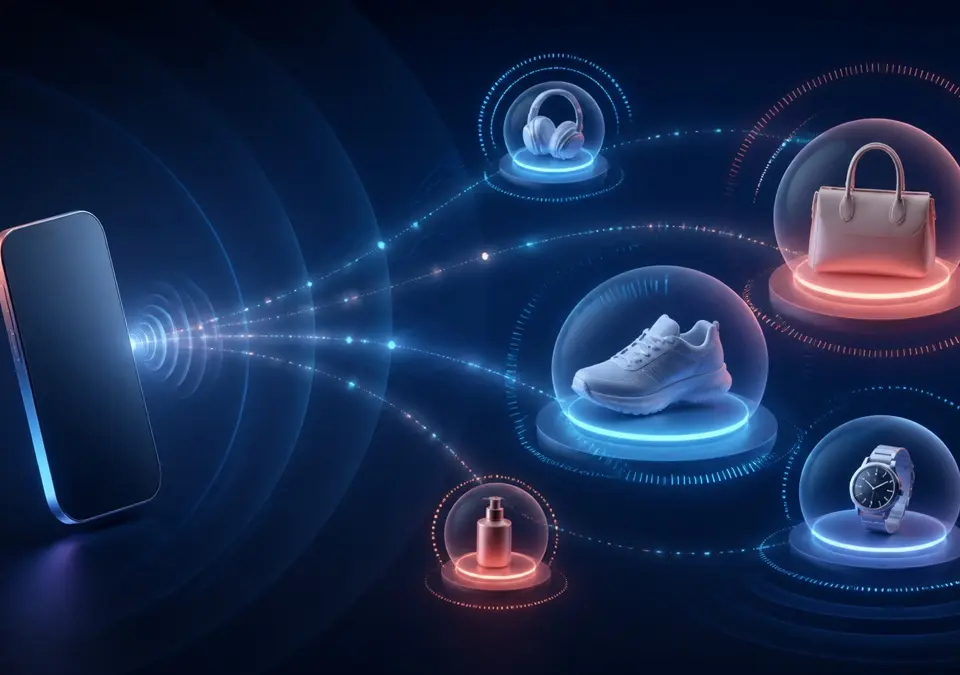
Your AI Ecommerce Push Notifications, Built Around Your Store
Describe the outcome you need. Runner uses your catalog, brand, and store context to prepare reviewable AI Ecommerce push notifications work, so you can approve it without moving data between tools.
Try AI Ecommerce push notifications with your store context now. Publishing and automation depend on your plan.
Push Notifications That Read the Room Before They Ring.
A notification sent at the wrong moment to the wrong segment is just noise. Runner AI connects push notifications to the live signals already inside your store so every send earns the tap, not just the impression.
Segment Before You Send
Runner AI can build push audiences from purchase recency, product category affinity, browsing intent, subscription status, and cart behavior — so the subscriber list for a flash sale notification is the shoppers most likely to buy, not every opted-in address.

Time Sends to Shopper Behavior
Runner AI can test delivery windows against historical engagement data and adjust timing rules per segment — without a separate testing platform to configure.

Connect Cart and Browse Signals
Cart abandonment and product page exits are strong re-engagement signals. Runner AI can trigger push notifications from those moments while keeping suppression windows, order state, and channel overlap visible so loyal subscribers are not over-notified.

Coordinate With Email and SMS
Push notifications are one channel. Runner AI treats them as part of a coordinated loop with email, SMS, and on-site messaging — so a shopper does not receive the same offer on three channels in four hours.

A product principle for AI Ecommerce Push Notifications
Keep AI Ecommerce push notifications work connected to real store context, make each proposed change reviewable, and publish only what the operator approves.
— Runner AI product principle
AI Ecommerce Push Notifications Should Start With Audience Logic, Not Broadcast Logic.
The default mental model for push notifications is broadcast: write a message, pick a send time, push to all. That model erodes subscriber trust fast because it treats every opted-in shopper as equivalent. Runner AI approaches push notifications from audience logic first. The workflow starts by asking which shoppers should receive this message today, given what the store knows about their purchase history, product affinity, price sensitivity, order cadence, inventory context, and recent channel activity. A repeat buyer of a seasonal product who has not yet reordered this cycle is a different audience from a first-time buyer who visited a category page yesterday. A subscriber who just received a winback email is a different audience from one who last bought two weeks ago with no friction. Runner AI can build those distinctions into the notification audience before the message is drafted, so the copy can be specific rather than generic. This connects directly to the segmentation work powering your AI ecommerce customer segmentation and makes every push campaign a deliberate store decision rather than a volume play. Explore how Runner AI handles the full AI ecommerce marketing picture to see where push fits.

Build push audiences from store context
Push Notification Copy Needs Inventory State, Not Just Marketing Copy.
Push notification text is short — a title and a few words of body. That brevity means every word has to carry weight. Runner AI can draft push copy from live store context: inventory level, product name, offer type, urgency signal, and the specific action you want the subscriber to take. A restock notification for a high-demand item can include the actual quantity remaining. A flash sale notification can include the exact discount and the end time. A browse-abandonment message can reference the product the shopper actually viewed. That specificity is not just a conversion technique — it is also honesty. Runner AI keeps inventory and product data visible inside the notification workflow so the copy reflects the real situation. This matters especially when push notifications sit alongside AI ecommerce email marketing and AI ecommerce SMS marketing — the same product claim in all three channels must be consistent, current, and accurate. If one channel says “sale ends tonight” and another extends the window, the subscriber notices.

Coordinate push with email flows
Suppression and Frequency Rules Keep the Push Channel Alive Long Term.
Shoppers who feel over-notified do not reduce their engagement — they turn notifications off entirely, and re-permission is rare. Runner AI treats frequency controls and suppression as first-class workflow logic, not afterthoughts. The push notification workflow can keep recent sends visible across channels, so a subscriber who received a promotional email yesterday does not also receive a push notification today about the same offer. It can pause notifications for subscribers with unresolved support issues or open refund requests, where a promotional message would feel tone-deaf. It can also limit how many pushes fire during a high-volume period — holiday weeks, sale events, new collection drops — so the subscriber experience stays coherent rather than frantic. These guardrails are not conservative tactics; they are what makes the push list worth owning in eighteen months. A healthy opt-in list that receives two carefully timed notifications a week is a more durable revenue asset than a degraded list that receives seven. Runner AI helps operators build that durability into the workflow from the start.

Product principle
The useful result is AI Ecommerce push notifications work you can review, revise, and connect back to the store — not another disconnected dashboard.
— Runner AI product principle
How AI Ecommerce Push Notifications Work in Runner AI
What are AI Ecommerce push notifications?
AI ecommerce push notifications are web or mobile alerts sent to opted-in shoppers from a store. In Runner AI, the workflow connects push delivery to live store data — purchase history, cart state, inventory level, and channel activity — so each notification reaches the right subscriber at a moment when it is likely to be useful rather than intrusive.
How is Runner AI different from a push notification plugin?
A plugin usually sends notifications on schedule to a static list. Runner AI connects the push workflow to customer segmentation, inventory context, email, SMS, and suppression logic inside the same operating system — so the push audience is dynamic, the copy reflects live store state, and the same subscriber is not hit by three channels at once.
Can push notifications coordinate with email and SMS?
Yes. Runner AI can make recent channel sends visible across the push, email, and SMS workflows so a subscriber who received a promotional email yesterday does not receive the same offer as a push notification today. Cross-channel suppression keeps the combined message load appropriate.
How does Runner AI decide who receives a push notification?
Runner AI can build push audiences from purchase recency, product affinity, browsing behavior, cart state, subscription status, and recent channel activity. That means a restock notification can go to shoppers who previously viewed the product, not to the full subscriber list.
How does frequency capping protect the push subscriber list?
Runner AI can enforce daily and weekly send limits per subscriber, pause notifications for shoppers with open support or refund cases, and flag disengaged subscribers for a re-permission decision rather than continuing to send into silence. These guardrails preserve list health and long-term deliverability.
Ready to Build Push Notifications That Shoppers Actually Want to Receive?
Create AI ecommerce push notifications that connect subscriber context, inventory state, campaign timing, and cross-channel suppression.
- Segment-first push audiences
- Inventory-aware notification copy
- Cross-channel frequency controls
Set up segmented push notification flows that send inventory-aware restock and flash-sale alerts, with frequency caps coordinated across my email and SMS channels.