
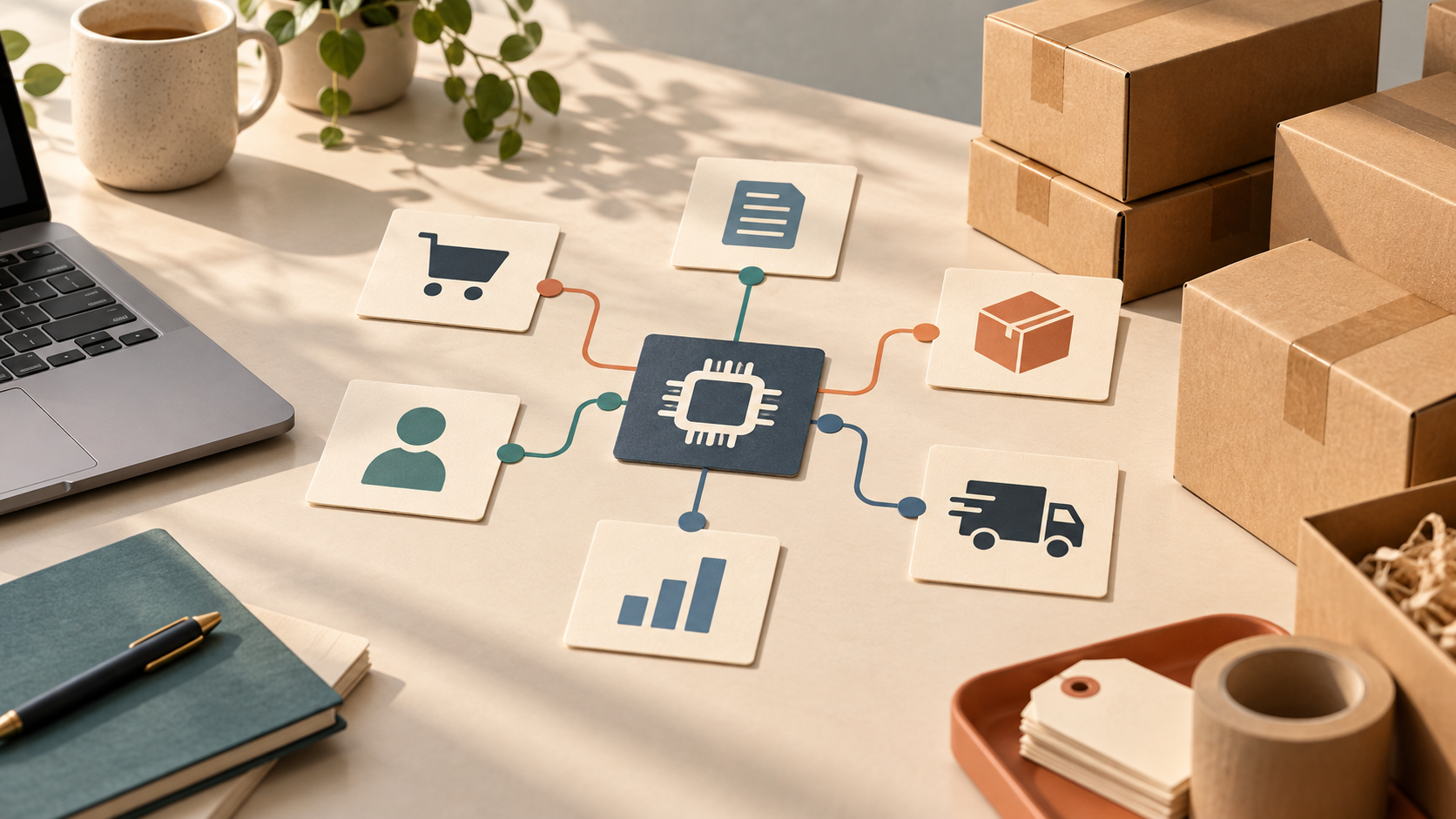
Inventory is the backbone of any e-commerce business. When it’s managed well, customers get what they want — on time — and your costs stay under control. Inventory management automation uses modern tools, including AI, to reduce the guesswork in setting reorder points and safety stock. This guide explains how AI helps small businesses avoid both stockouts and overstock, by improving demand forecasts, sending real-time stock alerts, and simplifying replenishment. We’ll also highlight how Runner AI, an AI-native e-commerce platform, helps automate inventory tracking, low-stock alerts, and restock recommendations for busy sellers. See how the Ecommerce Automation handles this at scale.
What is Inventory Management Automation and Why Does It Matter?
Inventory management automation means using software to handle stock levels, purchase orders, and threshold rules with minimal manual work. For small businesses, automation cuts human error, saves labor hours, and improves efficiency. Instead of reacting to shortages or excess inventory, owners get data-driven guidance that keeps stock where it should be — enough to meet demand without tying up cash. AI powers those recommendations by spotting patterns in historical data and turning them into practical reorder and safety-stock guidance. Accurate inventory data also feeds directly into effective catalog management, keeping product listings current across all channels.
How Does AI Simplify Reorder Point Calculation?
AI streamlines reorder point calculations by studying past sales and forecasting future demand. That lets you know when to reorder before you run out. AI models pick up on seasonal shifts, promotional spikes, and customer buying habits so reorder points can adjust automatically. The result is less time spent in spreadsheets and fewer costly stockouts that hurt sales and customer trust.
What Are Safety Stock Strategies and Their Importance?
Safety stock is the buffer you hold to cover demand spikes or supplier delays. Good safety-stock strategy balances the cost of holding extra inventory against the risk of lost sales. By analyzing historical variability, AI helps set safety levels that match your service goals — for example, maintaining enough backup inventory during peak seasons. That protects customer experience while keeping excess inventory in check. Runner AI’s Ai Ecommerce Analytics is built with this in mind.
How Does AI Improve Demand Forecasting for Stock Level Optimization?
AI enhances demand forecasting by running machine learning models over large and varied datasets. These models reveal trends and signals that aren’t obvious from simple averages — for example, early signs of a trend or correlations with external events. More accurate forecasts mean you stock the right products at the right time, which is especially valuable for small teams that don’t have the bandwidth for manual forecasting.
Industry studies and vendor research show AI-based forecasting improves demand prediction accuracy and inventory optimization in e-commerce supply chains.
Which Demand Forecasting Tools Enhance Inventory Accuracy?
Several AI-powered tools can boost forecasting accuracy and inventory planning. Look for solutions that offer real-time data, tight e-commerce integrations, and flexible forecasting models. Popular choices include:
- Forecastly: Advanced analytics with easy platform integrations.
- Inventory Planner: Forecasting and optimization tailored for small merchants.
- NetSuite: ERP-grade forecasting for businesses that need broader finance and operations features.
These tools help teams act on reliable forecasts and reduce guesswork that leads to overstock or missed sales.
How Does Predictive Analytics Prevent Stockouts?
Predictive analytics prevents stockouts by forecasting demand shifts before they happen. When models detect an upcoming increase in demand, you can boost reorder quantities or move safety stock proactively. That foresight keeps products available for customers and protects revenue — shifting your supply chain from reactive scrambling to planned responses.
In short, predictive analytics helps move inventory planning from hindsight-driven to foresight-driven decision making.
What Are the Benefits of Automated Stock Alerts and Replenishment?
Automated stock alerts and replenishment simplify day-to-day operations. Systems that watch inventory in real time notify you when items hit preset thresholds, so you can reorder before customers see a stockout. Automated replenishment removes manual steps from purchase ordering, cutting errors and saving time — especially useful when you’re wearing multiple hats as a small-business owner. These alerts also help keep your checkout and payment routing accurate by ensuring customers never purchase items that are actually out of stock.
How Do Real-Time Stock Alert Systems Work?
Real-time alert systems tie into your inventory software and continuously track quantities. When a SKU drops below its threshold, the system sends alerts — via email, SMS, or dashboard notification — to the responsible person. Many platforms also support automatic purchase orders or suggested reorder actions, making the response fast and consistent. Integration with sales channels keeps counts accurate across marketplaces.
What Integration Capabilities Support E-Commerce Platforms?
Integrations are essential for accurate, cross-channel inventory management. Runner AI integrates with popular e-commerce platforms like Shopify and marketplaces so inventory, sales, and order data stay synchronized. That unified view prevents overselling, simplifies replenishment, and gives you confidence in the numbers driving reorder decisions.
How Does Runner AI Automate Inventory and Stock Threshold Management?
Runner AI uses AI models that analyze your sales history and market signals to provide dynamic inventory forecasts and low-stock alerts. These forecasts update as conditions change, helping set dynamic thresholds based on current demand instead of static guesses. That lets small owners focus on growth while Runner AI handles the repetitive forecasting and alerts.
What AI Algorithms Drive Reorder Point and Safety Stock Calculations?
Runner AI’s approach combines machine learning models that factor in historical sales, seasonality, lead times, and market context. The models continually retrain on new data, improving accuracy over time. The outcome is smarter reorder timing and safety-stock sizing that reduces both stockouts and unnecessary inventory holding.
How Does Runner AI Support Solo Entrepreneurs and Small Business Owners?
Runner AI is built for busy owners who need powerful forecasting without a steep learning curve. The platform offers an intuitive interface, clear recommendations, and resources to help users adopt best practices. That makes advanced inventory controls accessible to teams of one or small operations without dedicated forecasting staff.
What Are the Pricing Plans and ROI of AI-Driven Inventory Automation?
Understanding cost and return matters. Runner AI offers tiered plans to fit different business sizes and needs. Investing in automation typically pays back through fewer stockouts, faster turn, lower carrying costs, and more consistent fulfillment — all of which improve revenue and customer loyalty.
How Do Pricing Tiers Compare for Different Business Sizes?
| Plan | Monthly Price | Credits |
|---|---|---|
| Free | $0 | 150 signup Credits |
| Plus | $25 | 1,000 per billing cycle |
| Pro | $49 | 2,500 per billing cycle |
| Max | $159 | 10,000 per billing cycle |
Feature access and transaction fees vary by plan, so compare the current Runner AI pricing details to the inventory workflows and capacity your operation needs.
Beyond inventory, AI automation extends to streamlining orders, returns, and operational workflows, helping small businesses scale without added headcount.
What Case Studies Demonstrate AI Impact on Inventory Efficiency?
Real-world AI examples show small retailers achieve drops in stockout rates (up to 30%) and sales improvements within months. Those gains come from better forecasting, smarter reorder timing, and fewer manual errors — a clear business case for automation.
Common Questions About Inventory and Stock Thresholds
As teams explore inventory automation, a few recurring questions come up. Below are practical answers to help you plan and implement smarter stock controls.
How to Set Reorder Points Effectively?
Set reorder points by combining demand averages, lead times, and safety stock. A simple workflow:
- Analyze Sales Data: Calculate average daily or weekly demand from historical sales.
- Determine Lead Time: Measure how many days it takes to receive replenishment after ordering.
- Calculate Safety Stock: Add a buffer for demand or supply variability so you don’t run out during unexpected spikes or delays.
Following these steps gives you reorder points that balance availability and capital efficiency.
How to Implement Safety Stock Strategies to Avoid Stockouts?
Implement safety stock by assessing variability and setting buffers that match your service goals. Practical steps:
- Assess Demand Variability: Use historical volatility to understand how much demand swings.
- Calculate Safety Stock Levels: Apply statistical or rule-of-thumb methods based on variability and lead time.
- Monitor Inventory Regularly: Revisit safety stock as demand patterns or supplier reliability change.
Proactive safety-stock management reduces stockouts while keeping excess inventory manageable.
Accurate stock data also plays a key role in tax automation and shipping rate management, ensuring shipping quotes and tax calculations reflect real-time availability.
To explore hands-on AI tools, visit the Experiments for experiments and integrations.
For more actionable tips on e-commerce operations, check the Runner AI blog for guides and case studies.
To learn about the team and our mission, read more about Runner AI and our commitment to helping small businesses scale.
Frequently Asked Questions
What are the key features to look for in an inventory management automation system?
Choose a system with real-time tracking, accurate demand forecasting, robust integrations with your sales channels, and automated stock alerts. Also prioritize a clear user interface, customizable reports, and multi-channel support — features that save time and reduce errors while improving decision-making.
How can small businesses measure the success of their inventory management automation?
Track KPIs like stockout rate, inventory turnover, and order fulfillment time. Customer satisfaction and repeat purchase rates are also important signals. Regularly reviewing these metrics shows whether automation is improving availability and reducing costs.
What challenges might small businesses face when implementing AI in inventory management?
Common challenges include data quality gaps, integration with legacy systems, and the need for staff training. You may also encounter resistance to changing established workflows. Address these by improving data collection, choosing user-friendly tools, and providing hands-on training and clear documentation.
How often should businesses review their inventory management strategies?
Review strategies at least quarterly, and more often during peak seasons or when market conditions shift. Frequent reviews help you spot trends, validate forecasts, and adjust thresholds after major changes in demand or supply.
What role does customer feedback play in inventory management decisions?
Customer feedback reveals preferences and demand signals that numbers alone might miss. Use feedback to adjust assortments, prioritize replenishment, and refine forecasts — all of which improve availability and customer experience.
Can small businesses benefit from using predictive analytics in inventory management?
Absolutely. Predictive analytics uses historical sales and market signals to forecast demand more accurately, helping you optimize stock levels and reduce stockouts. For small businesses, this means smarter ordering, lower holding costs, and better customer service — boosting competitiveness and profitability.