
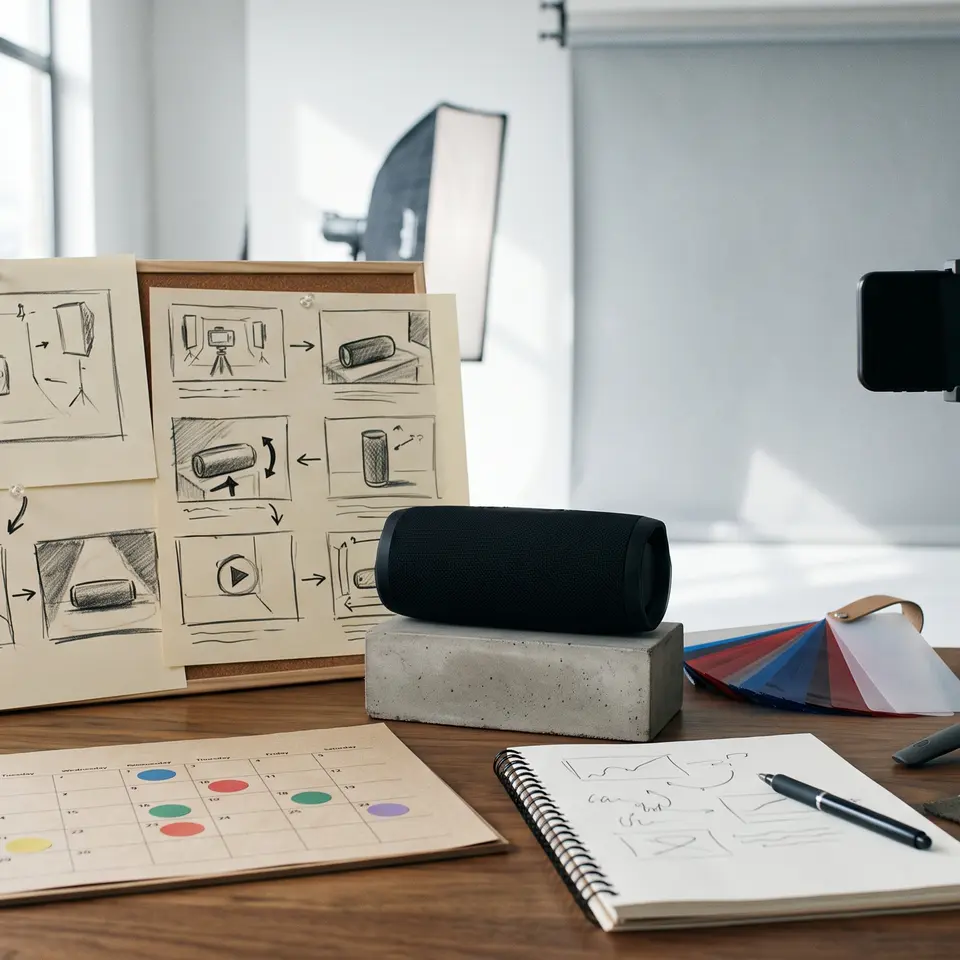
Your AI Ecommerce Video Generator, Built Around Your Store
Describe the outcome you need. Runner uses your catalog, brand, and store context to prepare reviewable AI Ecommerce video generator work, so you can approve it without moving data between tools.

Try AI Ecommerce video generator with your store context now. Publishing and automation depend on your plan.
Video Creative Built From Store Context.
Plan, review, and reuse ecommerce video assets from the same workspace that understands your catalog, campaigns, and storefront pages.
Catalog-Aware Video Briefs
Runner AI can use product titles, variants, benefits, objections, and collection placement to shape a video brief instead of making your team rewrite product context from scratch.

Channel-Ready Asset Planning
A launch rarely needs one video. Runner AI helps turn one product story into PDP, email, social, and paid creative directions that stay aligned across every channel.

Review Before Publishing
Operators can review product accuracy, offer fit, channel needs, and brand constraints before assets move into the broader campaign workflow.

A product principle for AI Ecommerce Video Generator
Keep AI Ecommerce video generator work connected to real store context, make each proposed change reviewable, and publish only what the operator approves.
— Runner AI product principle
Turn Product Context Into Video Direction.
Standalone video generators ask merchants to describe the product, shopper, offer, channel, and call to action every time. Runner AI already has the ecommerce context: product data, collection placement, storefront copy, campaign intent, and related assets. That makes video planning a natural extension of AI ecommerce product photography and product descriptions instead of another blank-prompt tool.

Connect visuals to product content
Coordinate Video With the Rest of the Campaign.
A product video becomes more useful when the landing page, email, social caption, and paid ad all tell the same story. Runner AI connects video direction with AI ecommerce content marketing and the AI ecommerce ad creative generator so the same offer context can move across channels without losing product accuracy or campaign intent.

Pair video with campaign content
Product principle
The useful result is AI Ecommerce video generator work you can review, revise, and connect back to the store — not another disconnected dashboard.
— Runner AI product principle
AI video generator for ecommerce FAQ
What is an AI video generator for ecommerce?
An AI video generator for ecommerce helps turn product context into video creative for product pages, ads, email, social, and launches. Runner AI frames that work from live store data, campaign goals, and storefront needs so video direction stays tied to the commerce workflow.
How is this different from a standalone video tool?
Standalone tools usually start with a blank prompt or one product image. Runner AI starts with catalog data, page context, offer logic, and related campaign assets, which makes the resulting video brief easier to review and reuse across channels.
Can Runner AI support video ads and product pages?
Yes. Video direction can support product page modules, launch pages, email blocks, social posts, and paid creative. The point is not one isolated clip; it is a coordinated campaign asset set that reflects the same product and offer.
Do merchants still control what goes live?
Yes. Teams can review product accuracy, brand constraints, channel format, and campaign fit before using generated video direction. Runner AI is designed to increase creative throughput while keeping operators in control of what ships.
Ready to Make Video Part of the Store Workflow?
Use Runner AI to connect product video direction with catalog data, campaign content, ad creative, and storefront optimization.
- Catalog-aware video briefs
- Channel-ready campaign assets
- Review workflows before publish
Create video directions for this product launch, then adapt the same offer into PDP, email, social, and ad-ready creative that matches our catalog and brand rules.